

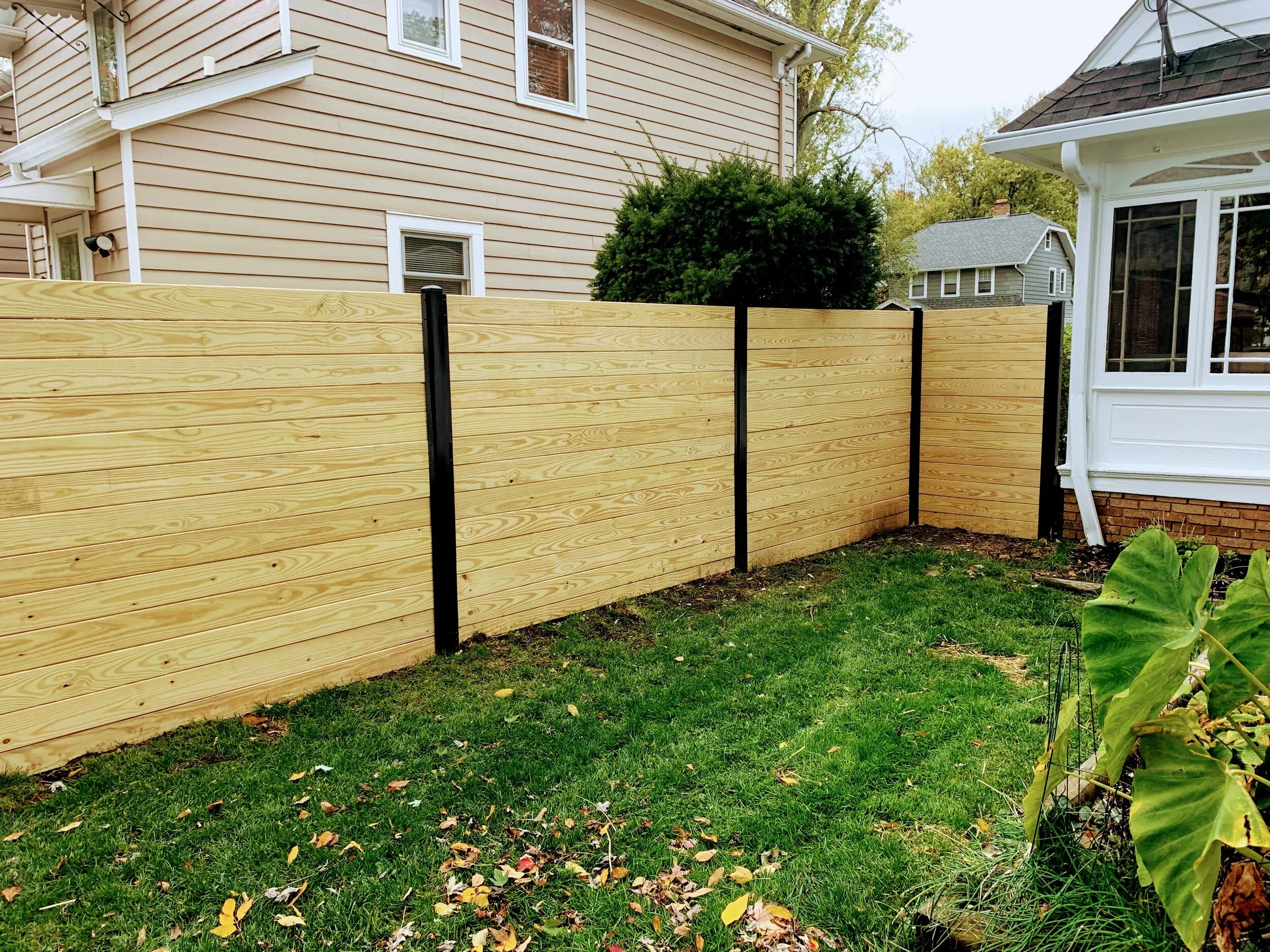
Slipfence:
Workmanship and Care
Your fence system uses the Slipfence aluminum framing system with pressure treated wood infill. This is a strong, flexible, and long-lasting system—but it’s important to understand one key reality: wood is a natural material and will move over time.
The goal of a proper installation is not to prevent movement entirely, but to ensure the structure remains secure, functional, and visually consistent within normal expectations.
What Is Normal
The following are expected and do not indicate a problem:
- Boards slightly warping, cupping, or twisting
- Small gaps forming or changing between boards
- Expansion and contraction with moisture and temperature changes
Pressure treated wood contains moisture when installed and will dry over time. As it dries, movement is inevitable and is not considered a defect.
What May Need Attention
The following fall into a monitor and maintain category:
- Boards that warp more than surrounding boards
- Fasteners loosening as wood dries
- Panels that appear slightly out of plane due to wood movement
These are typically cosmetic or minor performance issues and can be adjusted or corrected if desired.
Recommended action: minor adjustments or board replacement if aesthetics are a concern.
What Indicates a Problem
The following are not normal and should be addressed:
- Posts or structural components moving out of alignment
- Panels failing or becoming loose within the frame
- Improper spacing causing panel instability (greater than 74")
- Missing structural components required for system integrity
These issues may indicate installation or structural concerns and should be evaluated.
System Design & Installation Standards
Your fence was installed according to Slipfence system guidelines, including:
- Maximum span of 74 inches between posts
- Use of a vertical center board for added rigidity
- Screws installed at all contact points between vertical and horizontal members
These measures are designed to reduce movement, but they do not eliminate natural wood behavior.
First Year Expectations
The first year is when the most visible changes will occur as the wood acclimates.
- 0–3 months: Initial drying and early movement
- 3–6 months: Continued adjustment and stabilization
- 6–12 months: Wood reaches a more stable state
Most warping or movement will occur during this period and is considered normal.
Our Warranty & Repair Policy
Covered at No Cost (Workmanship Issues)
We will repair issues at no cost within the first year if they are caused by installation-related factors, including:
- Improper post spacing (exceeding 74")
- Failure to install required structural components
- Improper fastening or assembly
- Structural instability due to installation error
At-Cost Repairs (Material & Natural Movement)
The following are not considered workmanship issues and can be repaired at cost:
- Warping, twisting, or cupping of pressure treated boards
- Natural shrinkage or expansion of wood
- Aesthetic concerns related to wood movement
These are natural characteristics of wood and are expected over time.
Staining
Pressure treated wood will naturally change in appearance over time. Staining is the best way to achieve a uniform look and extend the life of your fence.
We strongly recommend staining your fence within 3–6 months after installation, once the wood has had time to dry and acclimate.
We recommend working with a professional staining contractor for best results:
Manufacturer Warranty (Slipfence System)
The Slipfence aluminum system is backed by a 25-year manufacturer warranty covering defects in material and factory finish under normal residential use.
This warranty does not cover:
- Normal wear and environmental exposure
- Improper installation or use
- Structural movement of surrounding materials (including wood)
- Damage from environmental conditions or external forces
To submit a claim, documentation including photos and proof of purchase is required.
Full warranty details: https://www.slipfence.com
What You Should Do If You Notice Issues
- Take photos of the area
- Note when the change occurred
- Monitor whether it stabilizes or worsens
- Contact us with documentation
This helps determine whether the issue is natural movement or requires correction.